Loading, please wait...
Pickleball
Tesla's $295 Aurum Pickleball Paddle Is More Serious Than It Sounds
A Tesla pickleball paddle sounds like a punchline. Look past the gold finish to compare the Aurum's Selkirk design, specs, and value against the Plaid.
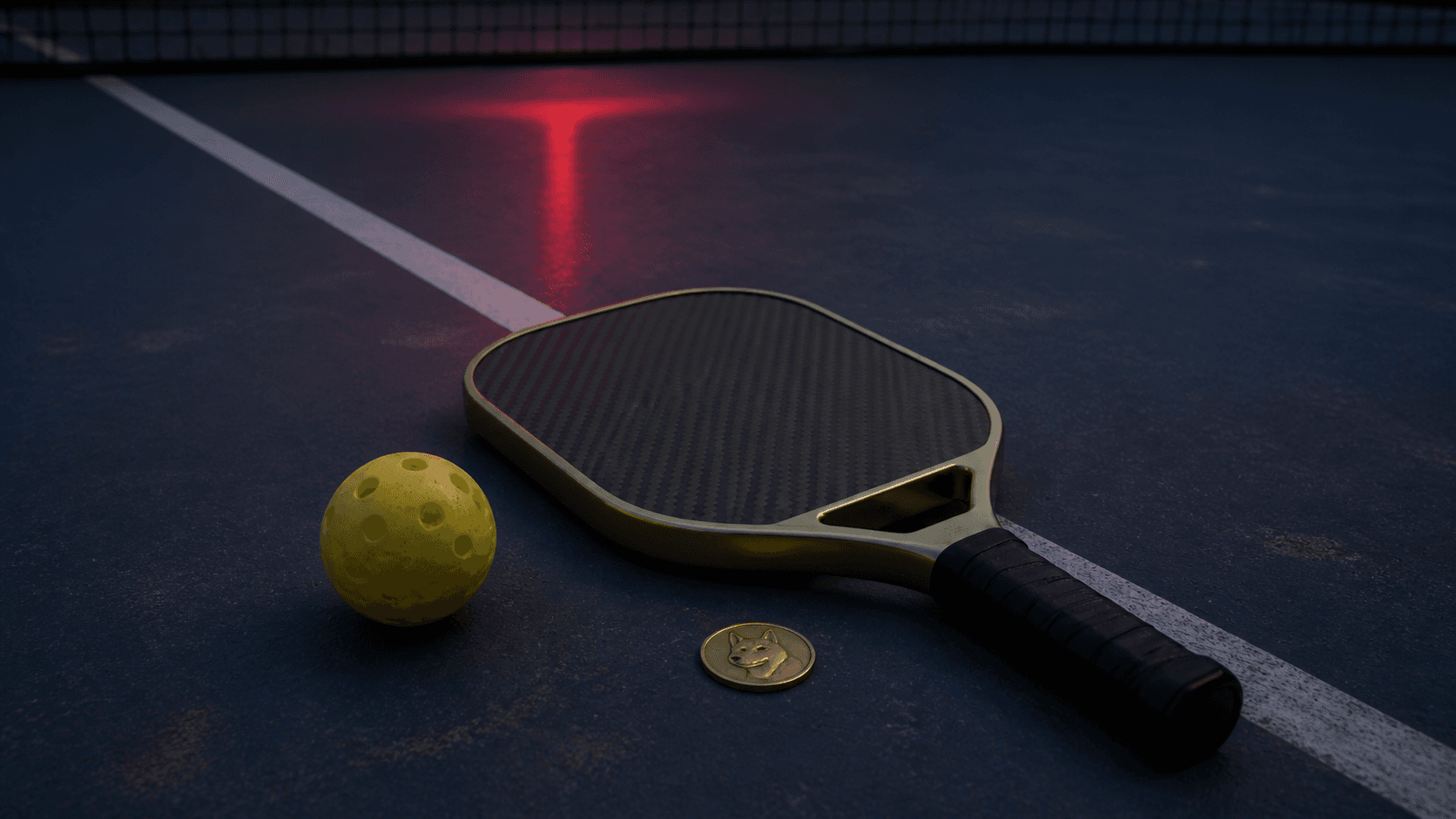
A Tesla pickleball paddle sounds like the setup to a joke. The company makes cars, batteries and humanoid robots; now it will sell you a gold paddle inspired by a driverless taxi for $295.
The punchline gets weaker once you look under the paint. The Tesla Aurum Pickleball Paddle by Selkirk is not a department-store blank with a Tesla logo heat-stamped onto the face. It uses the same platform as the Tesla Plaid paddle released in December 2025, and that platform was developed with Selkirk LABS hardware, Tesla design work and actual aerodynamic testing.
That makes Aurum a genuine performance paddle wrapped in collectible merch logic. It also does not make $295 sensible for most players. Both things can be true, which is where this odd little gold object gets interesting.
What Tesla released
Tesla launched the Aurum on August 20, 2026. The paddle costs $295 by itself or $350 with a bag, and it is sold exclusively through Tesla. The company does not present it as a replacement for the Plaid. Its own listing calls Aurum a new finish with the same shape, ergonomics and all-court performance.
The gold geometric face and bronze-toned details take their cue from Tesla's Cybercab. Whether that makes the paddle handsome or slightly too eager to match a robotaxi is a personal matter. The important buying detail is simpler: Aurum is a colorway, not a second-generation Tesla Selkirk paddle.
Tesla's shop page was live when we checked on August 24. The page did not give us a reliable enough stock signal to make an availability claim, so we will not play the internet's least rewarding game of declaring something sold out five minutes before a restock. Tesla is the exclusive seller, and availability may change.
This was not a logo-slap exercise
The original project started after Selkirk leaders visited Tesla's Fremont factory in March 2024. Selkirk's R&D director Tom Barnes and Tesla designers, including Director of Product Design Javier Verdura, turned the idea into a collaboration that ran through CAD work, prototypes and testing.
The division of labor makes sense. Tesla examined airflow around the paddle and how geometry affected drag during different swing paths. Selkirk handled the part where the object still had to behave like serious pickleball equipment. According to Selkirk's original Plaid announcement, the teams iterated on the elongated outline, edgeless perimeter and open throat after evaluating airflow, structural integrity, off-center stability and core durability.
Those details come from the companies that made the paddle, so they are evidence of a real development program, not independent proof that a throat hole will fix your late backhand. Still, more than a branding meeting happened here. Tesla influenced the geometry; Selkirk supplied the paddle platform.
What is actually inside the Aurum?
| Specification | Tesla's listed figure | What it suggests |
|---|---|---|
| Size | 16.4 by 7.5 inches | Elongated reach with less face width than a widebody |
| Thickness | 16 mm | A control-oriented thickness, though construction matters as much as the number |
| Weight | 7.8 to 8.1 ounces | Normal midweight territory |
| Handle | 5.35 inches; 4.25-inch circumference | Enough length for extra reach and some two-handed backhands |
| Swing weight | 118 | Some mass through the swing without an extreme published figure |
| Twist weight | 6.2 | A stated measure of resistance to twisting on off-center contact |
| Face and surface | Florek carbon fiber; InfiniGrit | A carbon face with an applied texture intended to produce spin |
| Core | PureFoam with MOI weights | A foam build with perimeter tuning rather than a basic polymer honeycomb |
The PureFoam core is the biggest reason not to dismiss this as a souvenir. Selkirk developed the foam construction as an alternative to the polypropylene honeycomb used in many paddles. The company says it is designed to resist core crushing and maintain a consistent response over time. That durability language is a manufacturer claim, not a result AthleteXpert has verified.
InfiniGrit is Selkirk's textured surface. Selkirk claims three times the spin durability of raw carbon; again, that number belongs to Selkirk. In practical terms, surface texture gives the ball more friction, which can help shape topspin drives, slices and serves. It cannot create spin without swing path and contact doing their share.
The MOI weights tune mass around the perimeter. MOI means moment of inertia: here, think of it as how stubbornly the paddle resists being knocked off line. More useful stability can make mishits feel less punishing, although weight placed away from the hand can also make a paddle slower to move at the kitchen. The published 118 swing weight and 6.2 twist weight are useful reference points, not a promise about feel.
Then there is the open throat. Tesla and Selkirk say the cutout and edgeless shape reduce drag. That is plausible and was central to their testing, but neither company publishes enough comparative wind-tunnel data on the product page to tell a buyer how much quicker it is than a conventional elongated paddle. Aerodynamic optimization is real work. Its on-court advantage is harder to price.
There is independent evidence, with a catch
Aurum is new, and AthleteXpert has not played with it. Independent testing of the mechanically identical Plaid platform is the relevant evidence we have.
Reviewer John Kew measured the Plaid at 2,484 rpm in his spin test, placing it at the top end of the legal paddles he had tested at the time. JustPaddles later recorded 1,600.55 rpm and 38.99 mph exit velocity in its own Paddle Lab, ranking the paddle highly for spin in that dataset and around the middle for power. Its play tester liked the control and resets but described the paddle as head-heavy and said the price was difficult to justify.
Those spin numbers should not be compared directly. Test rigs, balls and swing methods differ. What matters is that two independent systems both found strong spin relative to the other paddles tested under the same method, while the JustPaddles result did not show extraordinary raw power. That is a more useful picture than the phrase “all-court performanceâ€: the platform appears legitimately spin-capable and control-friendly, with a maneuverability tradeoff some players will notice.
Tesla Aurum vs. Tesla Plaid
| Tesla Aurum | Tesla Plaid | |
|---|---|---|
| Release | August 20, 2026 | December 12, 2025 |
| Look | Gold, inspired by Cybercab | Original black-and-white Tesla treatment |
| Platform | Plaid shape and construction | Original Tesla-Selkirk platform |
| Listed performance specs | Same shape, ergonomics and all-court setup | 16 mm PureFoam, elongated open-throat design |
| Launch price | $295 paddle only; $350 with bag | $350 |
| Seller | Tesla exclusive | Tesla exclusive at launch |
If you own the Plaid, Aurum offers no stated performance upgrade. You would be paying for gold. Collectors have made stranger decisions before breakfast, but players should understand the transaction.
Who should spend $295 on it?
The cleanest case is the player who already shops in the premium Selkirk or LABS tier, likes elongated 16 mm paddles and wants this specific design. A Tesla fan who also plays several times a week is not buying a useless trinket. A paddle collector may value the collaboration separately from its court performance. Someone who wants a high-spin foam paddle and has tried the Plaid platform has an equipment-based reason, too.
The weaker case is almost everyone else. A recreational player does not need a $295 paddle to learn a third-shot drop, stop popping up dinks or win the local ladder. The Aurum's narrow elongated shape may be less forgiving than a widebody for a newer player, and the independent Plaid feedback suggests it will not suit everyone who values fast hands.
There is also a basic value problem. Selkirk itself sells capable paddles below this price, and the wider market is full of legitimate carbon-face and foam-perimeter options. The Tesla tax is not imaginary just because the engineering is real.
Better value does not require a mystery bargain
AthleteXpert's current catalog does not contain a fresh, like-for-like premium all-court alternative that we can recommend responsibly here. Several database paddles serve the quiet-equipment niche, which is a different job, and older Amazon entries lack current price data. We would rather leave money on the table than pretend those are direct Aurum substitutes.
If $295 makes you wince, start with our budget pickleball gear watchlist to compare starter gear and check current Amazon listing terms. Players dealing with court noise can compare our guide to quiet-category paddles. The AthleteXpert pickleball community is another sensible place to compare shapes and real-world preferences before paying for a design collaboration.
Try the shape before buying whenever possible. A 7.5-inch face, 5.35-inch handle and 118 swing weight tell you more about fit than a gold finish ever will.
The strange part is that the engineering is real
The Aurum is expensive Tesla merchandise. It is also a serious Selkirk paddle. Calling it only one or the other misses the whole story.
There is no new performance breakthrough in the gold version, and no ordinary player needs one. Yet the underlying Plaid platform has a foam core, measurable spin, thoughtful weight tuning and geometry shaped by more aerodynamic work than most pickleball paddles will ever see.
Somewhere between Fremont and Selkirk's Idaho lab, two engineering teams spent more than a year worrying about air moving through a pickleball paddle. That is objectively ridiculous. It is also why the joke has a pretty good forehand.
Reporting note: AthleteXpert reviewed the official Tesla listing, Selkirk's collaboration page, Selkirk's original Plaid announcement, the USA Pickleball approved-equipment resource, and independent Plaid testing from John Kew and JustPaddles. We did not physically test the Aurum.