Loading, please wait...
Pickleball
Best Indoor Pickleball Shoes: 3 Picks for Basketball Courts
Compare three indoor court shoes for pickleball, then use ten floor, fit, and buying checks before choosing a pair for a basketball gym.
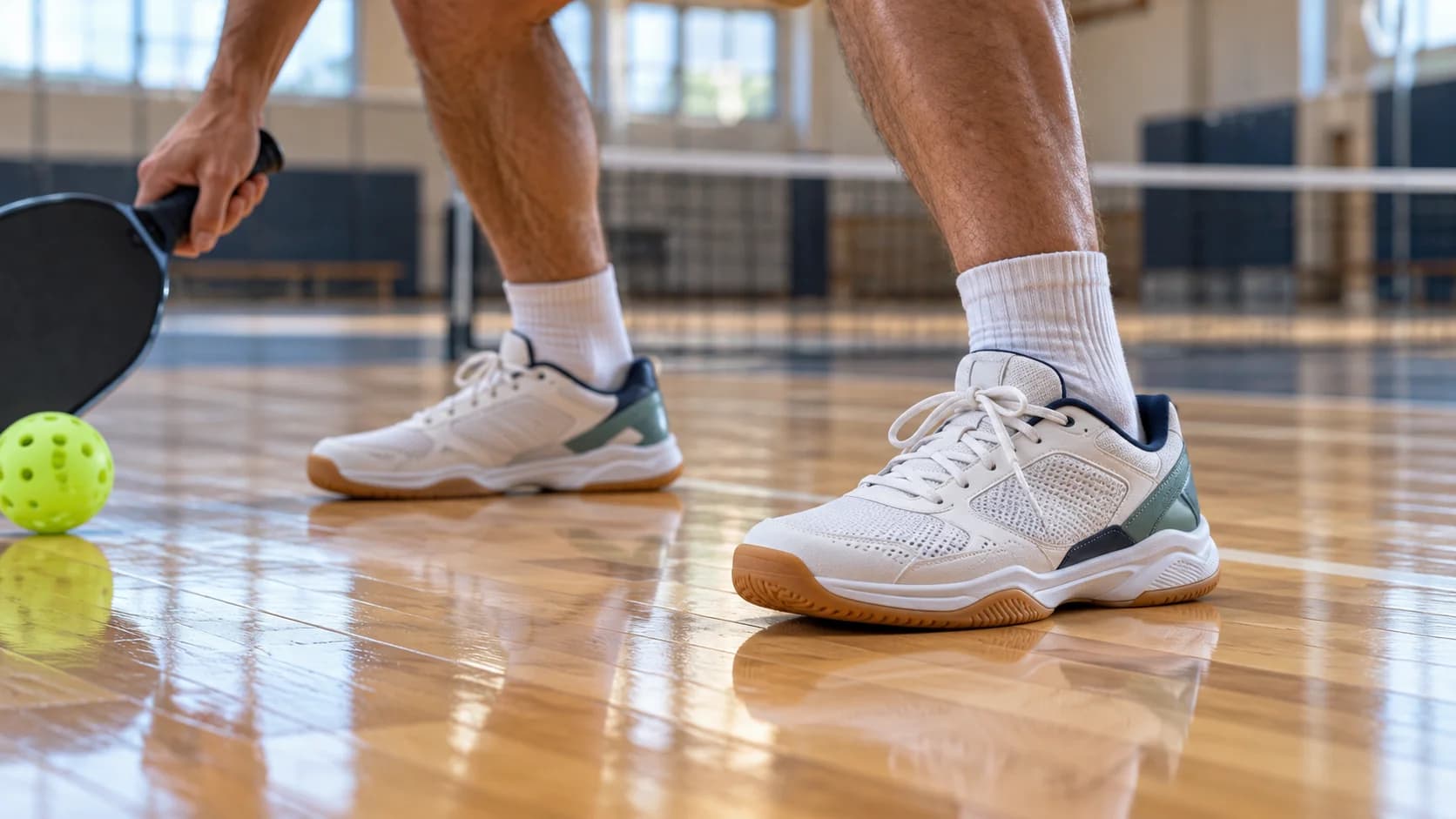
The best indoor pickleball shoe starts with the floor under your feet. For a hardwood basketball court, look for a clean, non-marking indoor court outsole, a secure fit, and support when you move sideways. A building with a roof can also contain an outdoor-style acrylic court, so “indoor” on the booking page does not settle the shoe question.
Our starting shortlist is the ASICS GEL-ROCKET 11, ASICS UPCOURT 6, and adidas Ligra 8. They are indoor court models with different buying priorities, rather than three shoes we have measured against one another. The cited Rocket description specifies a non-marking outsole; the other two need an exact-version check before purchase for a strict non-marking gym. Below, you will find the reasons to compare each, the limitations, and ten checks that matter more than the pickleball label on the box.
As an Amazon Associate, AthleteXpert earns from qualifying purchases. This article contains affiliate links.
How we selected: manufacturer descriptions, exact product identities, and practical floor and fit considerations. AthleteXpert has not performed hands-on traction tests on these shoes. Prices, size availability, and seller terms vary; the recommendations do not imply that any model is the cheapest or grippiest available.
Choose the shoe category before choosing the brand
| Your playing surface | Start by looking for | Check before playing |
|---|---|---|
| Hardwood basketball or volleyball floor | An indoor court shoe with a documented non-marking outsole | The venue’s policy, outsole cleanliness, and secure lateral fit |
| Indoor acrylic pickleball or tennis court | A court shoe intended for that surface | Wear requirements and how the shoe handles side-to-side movement |
| Rubber or multipurpose sports flooring | The footwear category the facility recommends | The actual floor material; “sports court” is not one surface |
| Alternating between a gym and outdoor courts | A clean indoor pair plus an outdoor court option if needed | Whether one pair can meet both venues’ rules without carrying grit inside |
If your current basketball shoes fit securely and the gym permits their exact soles, you may already own a workable starting point. If your running shoes feel comfortable walking to the court, that does not establish how well they support lateral stops. Evaluate the intended use and fit before deciding to reuse either pair.
Three indoor court shoes worth comparing
1. ASICS GEL-ROCKET 11: start here for a court-focused design
ASICS describes the GEL-ROCKET 11 as a multipurpose indoor court shoe. Its published features include a non-marking wrap-up outsole, an outrigger for lateral support, and TRUSSTIC technology intended to improve stability. Those are relevant design features for a player moving across a gym floor; they are not an independent measure of pickleball grip.
Compare it if: you want an indoor court model with explicit lateral-support features. Keep looking if: the selected size pinches your forefoot or your main playing surface is abrasive outdoor acrylic. The cited Australian manufacturer page marks this generation discontinued, so confirm the exact US listing and available size rather than assuming a full size run.
Check men’s ASICS GEL-ROCKET 11 options on Amazon
2. ASICS UPCOURT 6: compare for a simpler, flexible option
The ASICS UPCOURT 6 is a volleyball shoe that the manufacturer describes as lightweight and flexible, with extensive mesh paneling. It belongs on a beginner’s comparison list when the goal is a straightforward indoor shoe and a comfortable fit.
Compare it if: you are building a basic gym-court setup and want to compare the final price in your size. Keep looking if: you need a width or support feel the selected version does not provide. The cited US page does not explicitly establish non-marking status. Ask the seller or ASICS about the exact version and confirm venue acceptance before buying for a strict non-marking gym.
Check men’s ASICS UPCOURT 6 options on Amazon
3. adidas Ligra 8: a current indoor court alternative
The adidas Ligra 8 has a synthetic leather and mesh upper, reinforced Adituff toe, cushioned midsole, and rubber outsole in the manufacturer’s description. It is another indoor model to investigate when the ASICS fit does not work for you.
Compare it if: you want a different indoor court fit and find the correct adult version in your size. Keep looking if: the seller cannot confirm a required non-marking outsole. The cited page does not explicitly establish that status; older Ligra 7 specifications should not be transferred to this generation.
Browse Ligra 8 options in the adidas US collection. This manufacturer link provides an alternative without inventing an Amazon product destination.
Ten checks before buying indoor pickleball shoes
- Ask what the floor is. “We play inside” could mean hardwood, acrylic, rubber, or a temporary surface. Ask the facility before opening shopping tabs.
- Read the non-marking requirement. A pale sole does not prove that a shoe meets the venue’s rules. Look for a statement about the exact outsole, then ask staff if the policy is unclear.
- Check intended use. Indoor volleyball and other court shoes can be worth comparing for hardwood. An outdoor court shoe may make more sense on an indoor acrylic court.
- Evaluate sideways fit. During a gentle indoor try-on, notice whether your foot slides inside the shoe or your heel lifts. Walking comfort is only one part of the decision.
- Leave your toes room. Avoid a shoe that compresses the forefoot. The return window is more useful than a stranger’s universal “size up” rule.
- Wear your actual court socks. Changing sock thickness after fitting can change the space inside the shoe. Bring any insole you normally use when trying it on.
- Compare the complete version. Check men’s versus women’s sizing, width, model generation, and outsole description. A familiar family name is not an exact product match.
- Keep outdoor dirt off gym soles. Change at the venue when practical. Ask staff how they want footwear cleaned; avoid adding grip sprays or other treatments without permission.
- Inspect the floor as well as the shoe. Dust or moisture can make a session unsuitable regardless of the model. Report a slippery area instead of trying to fix it with faster footwork.
- Compare your final size-specific price. Confirm seller, condition, delivery, and returns. A low price on a size you cannot wear is not a useful saving.
Do you really need two pairs?
Possibly, but buying a second pair should solve an actual problem. If you alternate between outdoor courts and a hardwood gym, a dedicated indoor pair makes it easier to arrive with clean soles. If both venues use similar acrylic surfaces, one suitable court shoe may cover both, subject to their rules and the condition of the outsole.
The stronger reason to separate shoes is the surface and cleanliness requirement. The word “indoor” alone is a weak reason to buy more gear.
Can you wear basketball shoes for pickleball?
They are worth evaluating for a basketball-floor session if they fit, support lateral movement, and comply with the facility’s footwear rules. There is no need to replace an acceptable pair solely because the sport changed. On the other hand, a basketball shoe that feels bulky or allows your foot to slide is not automatically the right pickleball shoe either.
If a wide fit is your priority, our guide to men’s basketball shoes for wide feet explains how to distinguish true width options from general fit claims.
What we would compare first
For a hardwood gym, start with the GEL-ROCKET 11 if its exact version, size, and venue acceptance line up. Compare the UPCOURT 6 when a simpler shoe fits your budget, after resolving the outsole requirement. Keep the Ligra family on the list if the ASICS fit does not work, checking the specifications of whichever generation you actually buy.
Once footwear is settled, spend your next gear dollar on the problem you actually have. Our solo pickleball practice tools guide covers practice options, and our cold-weather pickleball comparison helps if your fall games still happen outside.
Research checked: October 7, 2026. Manufacturer links support product descriptions; fit and buying priorities are editorial guidance. Recheck model availability and the exact outsole before purchasing.