Loading, please wait...
Pickleball
Best Quiet Pickleball Paddles in 2026: USA Pickleball-Approved Options Compared
Want less pop without giving up your whole game? We compare quiet-category pickleball paddles listed by USA Pickleball, explain the approval fine print, and point you toward the right shape for your court.
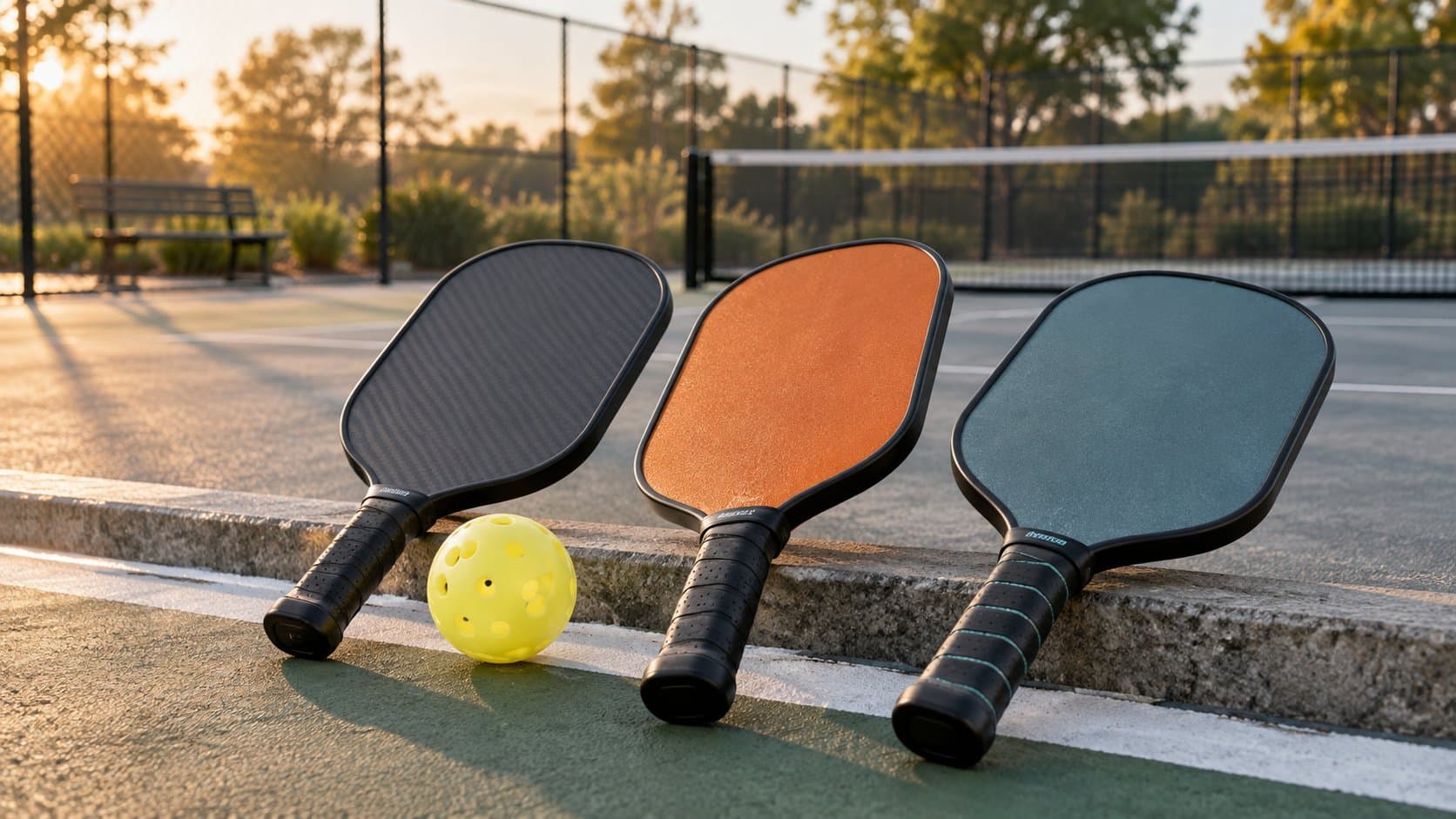
Pickleball has a sound. You know it. Your neighbors know it. The person reading beside Court 3 knows it with the calm focus of a hostage negotiator.
That sharp pop is part of the game, but it can also end open play early, start another group-chat argument, or make a lovely Saturday morning feel like a drum solo no one requested.
Quiet paddles are a real answer. They are not silent. No paddle can make four adults arguing about a kitchen-line call sound peaceful. They can reduce the sound of ball contact, though, and USA Pickleball now keeps a public Quiet Category list.
One useful warning before we begin: Quiet Category status and tournament approval are separate things. Check the current USA Pickleball approved-paddle list and your event rules before you enter a sanctioned event. A paddle can be a smart choice for a noise-sensitive court and still need a second rule check.
Quick verdict: Start with the Silent Storm SS1 if you want a wide, simple, low-cost option. Pick the OWL PXE if you want an elongated paddle with faster hands. Choose the Diadem Hush when lowering the pop is your main goal. The Whisper Silencer Pro and Stafford Blackbird suit players who want a more serious, longer paddle. Bring the right ball, too. The paddle cannot do all the quiet work by itself.
How we made this list
We started with USA Pickleball’s current Quiet Category page. Then we checked each maker’s product page for shape, thickness, stated use, and availability. We did not run our own sound lab. That means we do not pretend a paddle is the quietest because a marketing page used a large font.
Our picks are for players who want less noise and a paddle that still makes sense in a real game. That includes the serve that clips the tape, the rushed reset, and the backhand you swear looked good from your side of the net.
Quiet paddles compared
| Paddle | Best fit | What stands out | Check before you buy |
|---|---|---|---|
| Silent Storm SS1 | Newer players and wide-face fans | 16 mm, 15.5-inch body, and a stated all-around focus | Confirm current stock and event rules |
| OWL PXE | Players who want quicker hands | 13 mm elongated shape and 5-inch handle | Its firmer, thinner build will not suit every player |
| Diadem Hush | Noise-sensitive courts | eTPU foam face; Diadem says it tested 40% quieter than standard paddles | Check current tournament approval for your event |
| Gearbox Pro Ultimate Power 14mm | Experienced players who want power with a quiet-category listing | 14 mm elongated build; maker lists Quiet and PBCoR approval | Try the feel first if possible |
| Whisper Silencer Pro | Players who want a raw-carbon, longer shape | Thermoformed raw-carbon face and a stated 8.2-ounce weight | Confirm lead time; the maker has used pre-order releases |
| Stafford Q-Paddle Blackbird | Two-handed backhands and backcourt drives | 5.5-inch handle and an elongated shape | Read the maker’s current tournament guidance |
| ProXR Quiet Luxury | Wide-face players who find one in stock | 16 mm, 8-inch-wide Sweet Spot Max shape | The manufacturer page showed it sold out when checked |
1. Silent Storm SS1: the easy starting point
The Silent Storm SS1 has the friendliest shape in this group. It is 15.5 inches long and 7.75 inches wide. That gives you more face without making the paddle feel like a canoe paddle.
Its 16 mm core should appeal to players who value a softer feel and want help on off-center contact. Silent Storm lists it for USA Pickleball tournament, league, and event play, as well as the Quiet Category. That is unusually clean paperwork for a paddle whose job is to make less noise.
Choose it if you are newer to the sport, want a wider body, or simply do not wish to spend your afternoon explaining why your paddle resembles a science project.
2. OWL PXE: the quicker, thinner option
The OWL PXE is a 13 mm elongated paddle with a 5-inch handle. In plain English: it is built for players who want a faster move at the kitchen and a little more reach.
OWL lists the PXE as approved for sanctioned USA Pickleball tournament, league, and event play. It also appears on the USA Pickleball Quiet Category page. That makes it a strong fit for a player who needs one paddle for a quieter home court and a regular league night.
The tradeoff is simple. A thin paddle can feel lively. It can also feel less plush on resets. If you want a paddle that does the soft work for you, the 16 mm options deserve a look.
3. Diadem Hush: when the sound problem is the whole problem
The Hush exists because some courts need a lower sound profile, full stop. Diadem uses an eTPU foam face and a two-piece molding system. The company says the Hush tested 40% quieter than a standard pickleball paddle.
That claim comes from the maker, not our own testing. Still, the Hush is on USA Pickleball’s Quiet Category list, so it is the right paddle to investigate when the court has a strict noise policy.
Before you buy, ask one boring but important question: “What equipment does this court or event allow?” It is less exciting than a new-paddle unboxing. It is also cheaper than owning a paddle you cannot use where you play.
4. Gearbox Pro Ultimate Power 14mm: for players who do not want to give up pace
Some quiet paddles lean toward comfort. The Gearbox Pro Ultimate Power 14mm makes a different pitch. Gearbox lists it as Quiet Approved and PBCoR Approved, with an elongated 14 mm build.
This is the option for the player who wants less pop from the paddle, not less intent from the swing. It will make more sense for someone who already knows they enjoy an elongated shape and a firmer response.
Do not buy it because the name contains “Power.” Paddle names are not personality tests. Try it if you can, then decide whether the feel helps your soft game rather than making every dink an unpaid adventure.
5. Whisper Silencer Pro: a quiet paddle with a raw-carbon feel
The Whisper Silencer Pro brings a thermoformed raw-carbon face to the quiet-paddle group. Whisper Paddles lists it as Quiet Approved and says it meets tournament certification parameters.
That may appeal to players who have grown used to modern raw-carbon paddles and do not want a quiet option that feels like a padded door. Its stated 8.2-ounce weight and longer form also point toward a more experienced player.
One practical note: the maker has used pre-order inventory releases. Check availability before you decide this is the paddle that will save your neighborhood from the sound of your third-shot drive.
6. Stafford Q-Paddle Blackbird: long handle, quieter court
The Blackbird is the choice for players who like a longer handle, especially those who use two hands on the backhand. Stafford lists a 5.5-inch handle and describes the paddle as an elongated option for backcourt and midcourt drives.
USA Pickleball lists the Blackbird in its Quiet Category. The approved-paddle entry identifies a 13.5 mm poly core and carbon-fiber face. That gives the Blackbird a useful mix: a longer reach, a clear shape identity, and a lower-noise goal.
It is not the safest pick for every beginner. A wide face can be easier to square up. But if you already prefer an extended paddle, the Blackbird has a real case.
7. ProXR Quiet Luxury: useful if you find one
The ProXR Quiet Luxury uses a quiet fabric face on a wide, 16 mm body. Its 8-inch width is made for the player who feels better when there is more paddle behind the ball.
It belongs in this guide because USA Pickleball lists it in the Quiet Category. At the time of our check, ProXR showed it as sold out. So this is not a “click now” pick. It is a model to watch, or a paddle to consider if your local shop has one.
That is not a failure. Good buying advice sometimes means leaving your card in your pocket.
What “quiet” really means
USA Pickleball created the Quiet Category to recognize equipment with a lower acoustic profile. The organization has described an 80-decibel target and a 600-hertz ceiling for the category. Standard hard-paddle contact can sit higher than that.
Quiet does not mean silent. It does not mean your match becomes a library. You will still hear shoes, calls, laughter, the net, and the person who announces every score as if a microphone crew is nearby. The goal is a lower-impact ball strike.
Do not forget the ball
A quiet paddle helps. The ball matters, too. USA Pickleball’s Quiet Category page also lists quiet balls and names some lower-acoustic-profile balls. If your court has a sound rule, ask what ball it uses before you order a paddle.
This is the part many players skip. Then they bring a quiet paddle to open play, hit a hard outdoor ball, and wonder why the court still sounds like a popcorn machine with ambition.
Our buying advice
- For a first quiet paddle: Start with the Silent Storm SS1. Its wide, 16 mm build looks less intimidating.
- For quick hands and reach: Look at the OWL PXE.
- For a noise-sensitive community: Put the Diadem Hush at the top of your research list.
- For a modern, performance-led feel: Compare the Gearbox Pro Ultimate Power 14mm and Whisper Silencer Pro.
- For a two-handed backhand: The Stafford Blackbird has the handle length worth checking.
Use the USA Pickleball Quiet Category list as your starting point. Then check the approved-paddle list before a sanctioned event. Rules and product status can change. Paddles, like kitchen-line calls, have a talent for becoming complicated when you least expect it.
Frequently asked questions
Are quiet pickleball paddles legal in tournaments?
Some are, but Quiet Category status alone does not settle the question. Check the current USA Pickleball approved-paddle list and your event rules for the exact model.
Will a quiet paddle hurt my game?
It may feel different. Shape, thickness, face material, and weight affect feel as much as the sound-control design. Pick a paddle that suits your game first, then check its quiet status.
What is the quietest pickleball paddle?
We do not name one winner without a single, current, independent sound test across every model. Diadem says its Hush tested 40% quieter than a standard paddle. USA Pickleball’s Quiet Category list is the better neutral place to compare eligible products.
Do I need a quiet ball too?
Maybe. If your court has a noise policy, ask about both the paddle and ball. A quieter setup works best when the equipment matches the rule.
The bottom line
A quiet paddle is not an apology for playing pickleball. It is a way to keep more courts open, more neighbors relaxed, and more games on the calendar.
Choose the shape and feel that fit your game. Check the current rules. Bring the right ball. Then enjoy the rare pickleball rally where the loudest sound is someone saying, “Nice drop.”