Running
Your First Turkey Trot: What to Wear, Bring, and Expect
Get ready for your first Turkey Trot with a simple clothing and packing checklist, race-morning plan, walking tips, and event rules to check before you go.
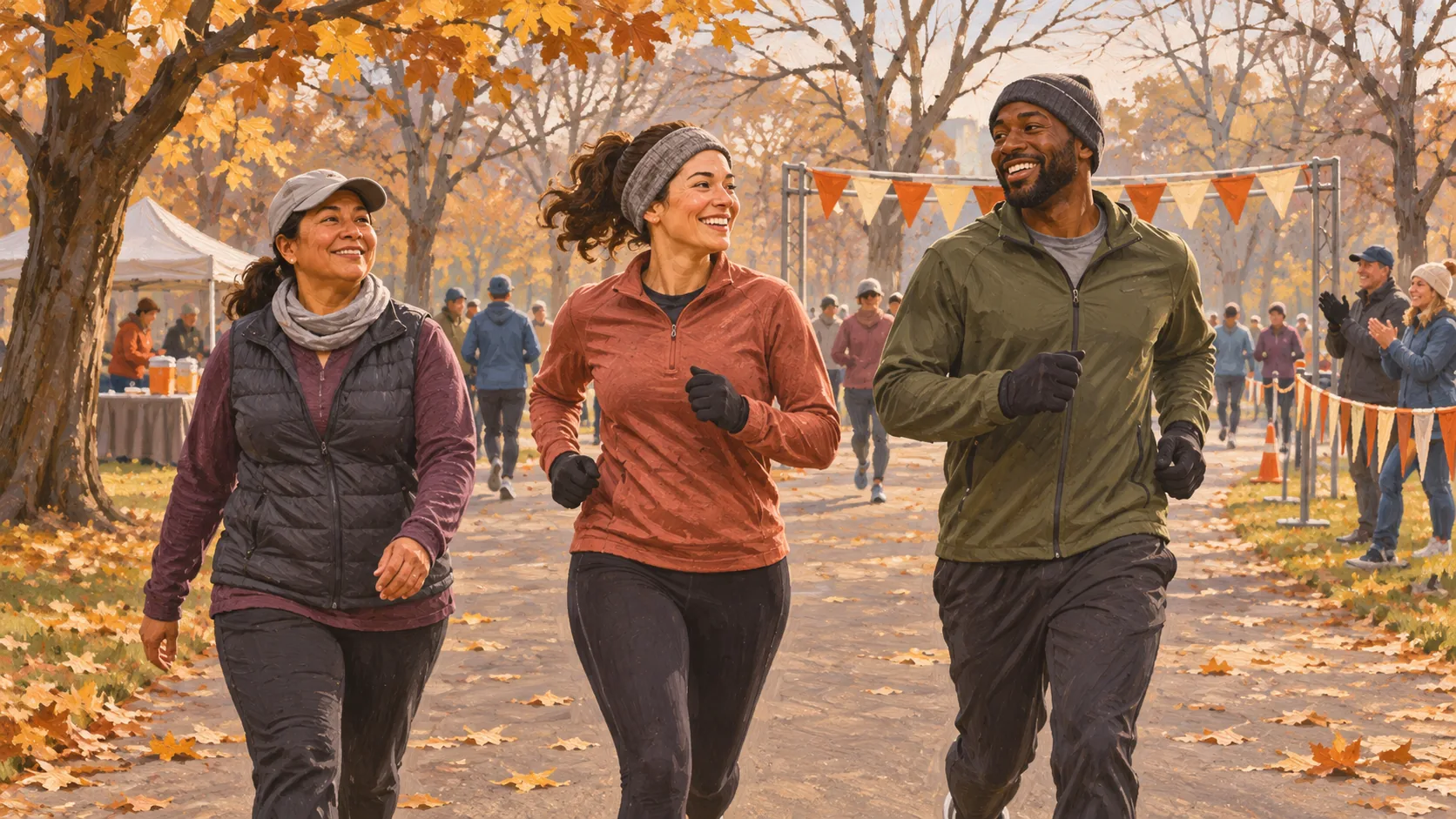
Your first Turkey Trot does not need a new wardrobe, a time goal, or a dramatic last-minute training plan. It needs a race you can comfortably participate in, familiar clothing, and a clear plan for getting to the start.
Start here: confirm the distance and walking policy, wear shoes you have already used, prepare for the weather while waiting as well as moving, and line up with people traveling at a similar pace. The event's own instructions take priority over any general checklist.
In 2026, U.S. Thanksgiving falls on Thursday, November 26, although individual events may take place on another date. Check your exact race rather than assuming every Turkey Trot happens Thanksgiving morning.
What is a Turkey Trot, and can beginners walk it?
A Turkey Trot is a Thanksgiving-themed running or walking event. The name does not specify a distance, a time limit, or whether every participant runs. A family-friendly atmosphere also does not automatically mean strollers, dogs, or unregistered friends are allowed.
For a concrete example, the Buffalo YMCA Turkey Trot is an 8K event that welcomes runners, joggers, and walkers. That is longer than a 5K. Read your organizer's distance, course, cutoff, and accessibility information before registering.
Turkey Trots are attracting substantial participation: RunSignup reported 512,441 registered participants across 1,090 Thanksgiving races on its platform as of October 29, 2026. Those are platform figures, not a count of every U.S. event or a measure of search volume.
Before you register: six details to confirm
- Distance: 5K is approximately 3.1 miles; 8K is approximately 5 miles. Verify whether there are separate shorter events.
- Walking and cutoff: is walking welcome, and does the time allowance fit your current comfortable pace?
- Course: check hills, surfaces, road closures, and any accessibility details you need.
- Registration: look for a deadline, capacity limit, age rules, and whether every family member needs an entry.
- Special arrangements: confirm stroller, pet, headphone, costume, and bag policies.
- Cancellation and communication: know where weather updates appear and what happens if the event changes.
If your current routine does not include comfortably covering the event's distance, choose a shorter permitted option or an event that supports walking at your pace. A crowded holiday race is not the place to discover whether an unfamiliar distance suits you.
What to wear to a Turkey Trot
Build the outfit around conditions at the start, during the event, and afterward. A cold wait near the corral can feel very different from moving along the course. Rain and wind can change the decision even when the forecast temperature looks mild.
| Item | What to choose | What to avoid changing on race morning |
|---|---|---|
| Shoes | A familiar pair suitable for the course surface | Brand-new shoes or a different fit |
| Socks | A pair already comfortable on a similar outing | Untried thick socks that make shoes tight |
| Moving layers | Comfortable clothing you can adjust for conditions | An outfit selected only for the parking-lot temperature |
| Hands and head | Gloves and a hat or headband when conditions call for them | Assuming a short race makes cold exposure irrelevant |
| Waiting layer | A removable layer with a planned storage arrangement | Leaving clothing on the course or assuming a donation collection exists |
| After the finish | A dry layer or change of clothes kept somewhere accessible | Having no way to warm up if you finish wet |
The Road Runners Club of America recommends layers and planning for shelter when weather changes. Cold exposure can also be a problem in wet conditions above freezing. Do not ignore persistent shivering, numbness, confusion, or loss of coordination; get help and reach a warm, safe place.
A costume is optional. If you wear one, try moving in it beforehand and make sure it does not obstruct vision, drag on the ground, or extend into another participant's space. Skip anything that makes breathing, balance, or adjusting layers harder.
For more equipment planning, our budget running essentials guide separates useful basics from optional extras. You do not need to buy every item to participate.
What to bring: the small-bag version
- Your bib, or the identification and confirmation your organizer requires for pickup.
- Bib fasteners if the packet instructions say to provide your own.
- A charged phone, transport details, and a simple meeting plan.
- Your familiar pre-event food or drink if needed for your schedule.
- Weather-appropriate layers and accessible dry clothing for afterward.
- Any personal essentials you normally need for an outing of this length.
Pack for the event you entered. Check whether there is a bag drop, what it accepts, and when it opens. If there is no storage, decide what stays with you, what stays securely in the car, and what a friend can hold. Do not leave valuables in an unattended pile near the start.
Keep breakfast familiar. Race morning is a poor time to experiment with a new supplement, a large unfamiliar meal, or a nutrition strategy you have never practiced. If you have individual food, hydration, or medical requirements, plan around those rather than copying another runner's routine.
The night-before checklist
Read the final participant email even if you already know the venue. An address can lead to a closed road, a different packet-pickup site, or the wrong side of a large park. Save the organizer's parking map and the actual start location.
- Confirm your event name, distance, date, and start time.
- Check whether you already have your bib or still need packet pickup.
- Lay out the outfit and pack the waiting and post-race layers.
- Review road closures and choose a backup parking or transport option.
- Agree where to meet companions if phone reception is poor.
- Check the latest forecast and official update channel.
If you are coordinating Thanksgiving plans, tell family when you reasonably expect to be available again. Travel, queues, and walking back from the finish can take longer than the race itself. Use the event schedule rather than estimating the whole morning from your expected finish time.
Race morning: work backward from the start
The following is a planning sequence, not a universal arrival-time rule. Use the organizer's requested arrival window, then allow additional time for your own pickup, toilet, mobility, and transport needs.
| Step | Your task | Check before moving on |
|---|---|---|
| Arrive | Park or reach the drop-off point | You know how to return afterward |
| Collect | Pick up the bib if necessary | You have the correct event entry |
| Prepare | Use the toilet, secure belongings, attach bib | You understand timing-chip instructions |
| Move gently | Walk and use familiar comfortable movements | Nothing about the outfit or shoes needs adjustment |
| Line up | Find the appropriate pace area or assigned wave | You can hear the official instructions |
Do not squeeze a hard workout into the wait. The goal is to arrive organized and ready for the activity you planned. If you are already tired, unwell, or dealing with conditions that make participation unsuitable, changing plans is reasonable.
How to handle the start, course, and finish
Place yourself according to the event's pace signs or assigned wave. Walkers should use the walking area when provided. If you plan to alternate running and walking, choose a position that matches your overall pace, not your fastest brief running speed.
RRCA's race etiquette guidance emphasizes considerate positioning, keeping aid stations clear, and continuing through the finish area instead of stopping on the timing mat. Follow volunteer directions and keep enough room for other people to pass.
Make the first part deliberately manageable. Crowds can make the opening pace feel faster than intended. If you planned to walk, walking from the start is fine when permitted. If you switch to a walk, check the space around you and move predictably rather than stopping suddenly.
On a shared course, avoid spreading your group across the full path. Discuss a meeting point before the start so nobody has to stop abruptly to regroup. Children and adults may have different preferred paces; agree on appropriate supervision and the event's rules rather than relying on finding each other in the crowd.
Once across the finish, keep moving into the designated area, collect only the items intended for your entry, and find your companions away from the finish chute. Change out of wet clothing and use your planned route home.
Frequently asked questions
Do I have to run the whole Turkey Trot?
Not if your chosen event permits walking and you can meet its cutoff. Confirm those details before entering. The name alone does not establish the rules.
Can I get ready for a 5K in two weeks?
Two weeks is not a reason to rush a new running program. Choose an event distance and permitted participation style that fit what you can already do comfortably. This guide is a preparation checklist, not a compressed training plan.
Do I need a running watch?
No. If the event uses chip timing, follow its bib and chip instructions. A watch is optional for your own pacing. Knowing the route arrangements and keeping your bib secure matter more than buying new technology for one morning.
Can I bring a stroller or a dog?
Only if the organizer permits it. Policies differ, and a family event can still restrict both. Ask before registering if the published instructions do not answer your question.
What if it rains or the course is icy?
Check official updates and evaluate your own ability to participate safely. A race proceeding does not mean every participant must start. Do not assume unfamiliar traction equipment or different shoes will solve unsuitable footing.
Sources and editorial notes
- RunSignup: October 2026 Turkey Trot participation snapshot.
- YMCA Buffalo Niagara: event-specific distance and participant information.
- RRCA: cold-weather running guidance.
- RRCA: runner and race-day etiquette.
Checked November 13, 2026. Checklists and planning examples are AthleteXpert editorial guidance; they are not instructions from a particular race or an individualized training plan. Local event rules and current conditions govern participation. No race attendance or product testing is claimed. Cover: AI-generated editorial illustration.